Online Journal: Your Complete Guide to Digital Journaling
Everything you need to know about starting and maintaining a free online journal — from choosing the right platform to building a lasting habit.
What Is an Online Journal?
An online journal is a private, digital space where you record your thoughts, experiences, and reflections using a web browser or mobile app instead of a physical notebook. It serves the same purpose journals have served for centuries: helping you process your inner world, track growth, and preserve meaningful moments. The difference is that your entries live in the cloud, accessible from any device, protected by encryption, and enhanced by features paper cannot offer.
Unlike social media, where you curate a version of yourself for others, an online journal is genuinely yours. There is no audience, no algorithm, and no pressure to perform. You write for yourself. A free online journal removes the last barrier to getting started: you open your browser or app and begin.
A Brief History of Journaling Going Digital
People have kept journals for as long as writing has existed. Marcus Aurelius wrote his Meditations as a private journal. Virginia Woolf used her diaries to work through ideas. The first wave of digital journaling appeared in the late 1990s with personal blogs, but those were public by default. True online journals, private and encrypted, emerged in the 2010s as cloud storage became reliable. Today, modern journaling apps combine the intimacy of a private diary with searchable archives, multimedia support, mood analytics, and cross-device sync.
Benefits of an Online Journal vs. a Paper Journal
Paper journals have a charm many people love: the tactile feel of pen on paper, the absence of screens, the aesthetic of filled notebooks on a shelf. But an online journal offers distinct advantages worth understanding, especially if you have struggled to maintain a consistent practice with paper.
Accessibility and Convenience
Your online journal travels with you. Whether on your phone during a commute, at your laptop during lunch, or on a tablet before bed, your entries are always within reach. This convenience directly translates to consistency, which is the single most important factor in getting value from journaling.
Searchability
Try finding a specific entry in a stack of paper notebooks from the last three years. With an online journal, you type a keyword and find it in seconds. This transforms your journal from a write-only medium into a living archive you can actually reference and learn from.
Security and Privacy
A paper journal can be read by anyone who picks it up. An online journal protected by authentication and encryption is far more secure. If your phone is lost, your journal remains safe behind your password. If your laptop is stolen, your entries are in the cloud, waiting for you to sign in from a new device.
Rich Media and Location
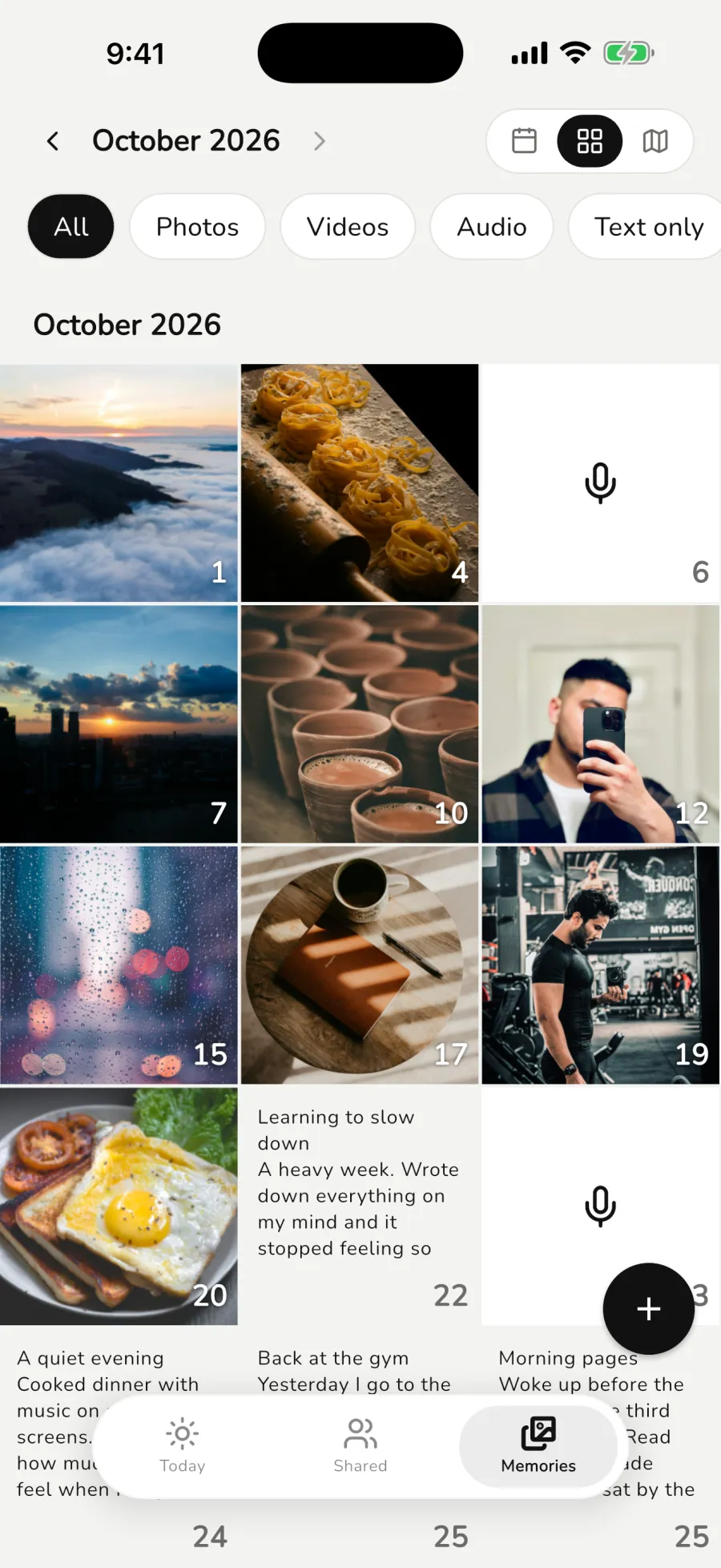
Words are powerful, but sometimes a photo captures a moment better than any sentence. Online journals let you attach images, voice recordings, and other media. Apps like WOYM support location tagging, so you remember not just what you felt but where you were when you felt it.
Backup, Durability, and Analytics
Paper deteriorates. Notebooks get lost in moves or damaged by water. Cloud-based journals are backed up automatically. Beyond durability, features like mood tracking let you visualize your emotional landscape across weeks and months. You might discover that your mood dips on Sunday evenings, or that you feel most energized after time outdoors. These insights are nearly impossible to extract from paper journals.
“The unexamined life is not worth living.” — Socrates. An online journal makes the examination easier, more consistent, and more insightful than ever before.
Try WOYM — A Free Online Journal
Private, encrypted, and designed for daily reflection. Start journaling in under a minute.
Types of Online Journals
There is no single “right” way to keep a digital journal. Here are the most popular approaches, and many people combine several within a single practice.
Daily Reflective Journal
The classic format: sit down once a day, usually morning or evening, and write about whatever is on your mind. Freeform and unstructured, the goal is to externalize your thoughts and create a record of your inner experience. Over time, this builds remarkable self-awareness.
Gratitude Journal
A gratitude journal focuses on what you are thankful for. Most people write three to five things each day. Research consistently shows this improves mood, sleep quality, and life satisfaction.
Mood and Emotion Tracker
By logging your mood alongside brief notes about what happened, you build a dataset of your emotional life. WOYM includes built-in mood tracking that lets you tag each entry with how you are feeling, then visualize trends over time.
Goal and Progress Journal
Whether fitness targets, career milestones, or personal development, a goal journal helps you stay accountable. WOYM supports goal tracking alongside your journal entries, so reflections and objectives live in the same space.
Prompt-Based Journal
When a blank page feels overwhelming, prompt-based journaling gives you a question or topic to respond to. Explore our collection of journal prompts for ideas ranging from lighthearted to deeply introspective.
Stream-of-Consciousness and Travel Journals
Stream-of-consciousness writing (or “morning pages,” popularized by Julia Cameron) involves writing continuously without editing. Travel journals capture impressions in the moment. Both benefit enormously from the always-with-you nature of an online journal, plus location tagging and photo attachments.
Features to Look for in a Free Online Journal
Not all journaling apps are created equal. Here are the features that matter most for a sustainable, rewarding practice.
End-to-End Encryption
Your journal contains your most private thoughts. Look for end-to-end encryption, where entries are encrypted on your device before reaching the server. Even the company behind the app cannot read your journal. This is non-negotiable for any serious journaling platform.
Cross-Device Sync
Write on your phone, read on your laptop, edit on your tablet, all seamlessly. Reliable sync removes friction from the journaling habit. If you have to think about which device has your latest entries, the app is failing you.
Multimedia Entries and Mood Tracking
Text is the foundation, but photos, audio recordings, and other media make your journal richer. Mood tracking lets you tag each entry with your emotional state and visualize those moods over time, turning subjective experience into observable patterns. Look for mood tracking that is simple enough to use daily but detailed enough to be meaningful.
Search, Organization, and Prompts
Full-text search is essential. Tags, categories, and calendar views help you navigate your history. Built-in journal prompts can be the difference between opening the app and actually writing something. Good prompts make you pause and think, not feel like homework.
Export Options and a Genuinely Free Tier
Your journal data belongs to you. Any reputable app should let you export entries in standard formats like PDF or plain text. Many apps advertise as free but wall off essential features behind subscriptions. WOYM offers a free tier that includes unlimited entries, mood tracking, and cross-device access.
Privacy and Security: Protecting Your Most Personal Writing
Privacy is the foundation of honest journaling. If you feel uncertain about who might read your entries, you will self-censor, and a censored journal loses most of its therapeutic and reflective value.
Understanding Encryption
Basic encryption in transit (HTTPS) protects data between your device and the server, but the company can still read your entries on their servers. End-to-end encryption means entries are encrypted on your device using a key only you possess. The server stores encrypted data it cannot decrypt. This is the gold standard.
Authentication and Access Control
Strong passwords and biometric authentication add essential layers of protection. Enable two-factor authentication if available. Use biometric lock for the app itself. These measures ensure that even if someone has your phone, they cannot casually open your journal.
Data Ownership
Read the privacy policy before committing. Does the company claim rights to your content? Can they use entries for advertising or AI training? Can you delete your data permanently? Can you export everything? WOYM was built with privacy as a core principle. Your entries are not used for advertising, not mined for data, and not shared with third parties. You can export or permanently delete at any time.
How to Start an Online Journal: A Practical Guide
Starting is the hardest part of any new habit. Here is a step-by-step approach that removes overthinking and gets you writing today.
- Choose your platform. Pick a free online journal that feels intuitive. Do not spend weeks comparing options. WOYM is free to try and takes less than a minute to set up.
- Set a tiny commitment. Commit to one sentence per day. The goal is to build the habit of opening your journal daily. Length comes naturally once the habit is established.
- Pick a consistent time. Attach journaling to an existing routine: after morning coffee, during lunch, or before bed. Consistency of timing matters more than consistency of output.
- Use prompts if needed. “What am I feeling right now?” is always a good starting point. Browse more ideas in our journal prompts collection.
- Do not edit as you write. Grammar, spelling, and coherence do not matter. What matters is honesty and showing up.
- Tag your mood. If your app supports mood tracking, use it from day one. It takes two seconds and builds valuable emotional data.
- Review weekly. Spend five minutes reading recent entries. This is where much of the insight from journaling actually emerges.
“A journey of a thousand miles begins with a single step.” — Lao Tzu. Your journaling journey begins with a single sentence.
Ready to Start Your Online Journal?
WOYM is free forever for core features. Mood tracking, cross-device sync, and media support included.
Tips for Staying Consistent with Your Online Journal
Most people who try journaling do not struggle with the writing itself. They struggle with doing it regularly. Here are evidence-based strategies for making the practice stick.
Habit Stacking
Link journaling to a habit you already do without thinking. After you pour your morning coffee, open your journal. This technique, from James Clear's Atomic Habits, leverages existing routines to anchor new behaviors.
Remove All Friction
Keep your journaling app on your phone home screen. The fewer taps between you and a new entry, the more likely you are to write. WOYM opens directly to a new entry so you can start writing in seconds.
Embrace Imperfection
Some entries will be profound. Most will be mundane. A few will be nothing more than “Tired today. Nothing to say.” That is fine. Perfectionism is the enemy of consistency.
Use Streaks Wisely and Vary Your Approach
Writing streaks can be motivating, but do not let a broken streak become a reason to quit. If you miss a day or a week, just open the app and write. If daily reflective journaling feels stale, try gratitude journaling for a week, use prompts, or record a voice entry instead of typing.
Mood Tracking as a Minimum Entry
On days when you do not feel like writing, logging your mood takes just seconds. This maintains engagement and builds emotional data over time. It is the minimum viable journaling entry and still provides real value.
Revisit Old Entries
Reading past entries is surprisingly rewarding. You rediscover forgotten insights, notice growth you did not realize was happening, and find motivation to keep writing. WOYM offers “on this day” features that surface entries from the same date in previous years.
The Science Behind Journaling
Journaling is backed by substantial research across psychology, neuroscience, and medicine. Understanding the science strengthens motivation to write regularly.
Expressive Writing and Emotional Processing
Psychologist James Pennebaker demonstrated that writing about emotional experiences for 15 to 20 minutes a day over three to four days produced measurable improvements in physical and mental health: reduced anxiety, improved immune function, and fewer doctor visits. These findings have been replicated across diverse populations. Learn more about the benefits of journaling and the research behind them.
Cognitive Offloading
When you write something down, you free your working memory from holding onto it. Your brain stops recycling anxious thoughts because they are safely recorded. This is why journaling before bed helps many people fall asleep faster: they have transferred their worries from mind to page.
Narrative Identity and Meaning-Making
Psychologist Dan McAdams showed that we understand our lives through the stories we tell about them. Journaling is constructing those stories. When you write about a difficult experience, you shape it into a narrative with a beginning, middle, and potential resolution, helping you make sense of what might otherwise feel chaotic.
Metacognition and Self-Awareness
Journaling develops metacognition: the ability to think about your own thinking. By externalizing thoughts, you create distance from your mental chatter. You become an observer of your mind rather than being caught up in it. Over time, this skill transfers to daily life, helping you respond thoughtfully rather than react automatically.
Common Mistakes to Avoid When Online Journaling
Journaling is forgiving by nature, but a few pitfalls can undermine the practice.
- Treating it as a performance. Do not write to impress a future reader. Write messily, honestly, and without concern for literary quality.
- Only journaling when things go wrong. Write on good days too. Capture joy, gratitude, and calm. This makes your journal a fuller picture of your life.
- Setting unrealistic expectations. Committing to 2,000 words daily leads to burnout. One sentence counts. Consistency beats volume.
- Never reviewing old entries. Writing is only half the value. The other half comes from reading back and reflecting.
- Using an app that feels like work. Choose something clean and fast. The best app is the one you actually open.
- Ignoring privacy settings. Configure biometric lock and use a strong password. The confidence that entries are secure enables the honesty that makes journaling valuable.
Who Benefits Most from Keeping an Online Journal?
Almost everyone benefits, but certain groups find particularly high value in the practice.
People Managing Stress or Anxiety
If your mind races, journaling gives those thoughts somewhere to go. Writing slows thinking to the speed of your hands, creating a natural brake on spiraling. Many therapists recommend journaling alongside professional treatment for anxiety and depression.
Students, Creatives, and Lifelong Learners
Journaling about what you are learning deepens understanding through elaborative rehearsal, one of the most effective study strategies in cognitive science. Writers, artists, and musicians use journals to capture ideas, work through creative blocks, and document their process. An online journal makes it easy to capture fleeting ideas the moment they arrive.
People in Transitions and Anyone Pursuing Goals
New jobs, relationships, cities, parenthood: life transitions are disorienting. Journaling provides continuity and a space to process change. For goal pursuit, writing intentions makes them concrete. Documenting progress makes it visible. Reflecting on setbacks turns them into lessons rather than failures.
Frequently Asked Questions About Online Journals
Is an online journal as effective as a paper journal?
Research suggests that the benefits come from reflective writing itself, not the medium. Both are effective. Online journals add searchability, backup, and accessibility that make the practice easier to maintain long-term.
How long should I journal each day?
There is no minimum. Even one sentence is valuable if written consistently. For daily reflective journaling, 5 to 10 minutes is a realistic target. Most expressive writing research uses 15 to 20 minute sessions, but those involved intensive writing about specific events.
What should I write about?
Whatever is on your mind. If you feel stuck, start with how you are feeling right now, or use a prompt. There are no rules. The best entry is the one you write.
Can I use an online journal for therapy?
Journaling is a well-established therapeutic tool and many therapists recommend it. However, it complements professional support rather than replacing it. If you are dealing with serious mental health challenges, seek help from a qualified professional alongside your journaling practice.
Is my data safe in a free online journal?
It depends on the platform. Some free apps monetize data through advertising. Others, like WOYM, offer a free tier while fully respecting your privacy. Always check the privacy policy and look for end-to-end encryption.
Can I switch from a paper journal to an online one?
Absolutely. You do not need to digitize old paper journals (though you can photograph pages and attach them as images). Start your online journal from today forward. Your paper journals remain a valuable archive of a different era.